

Team Kits Printing UK:For Local Clubs and Schools
Unified by Design: Engineering Professional Identity for the UK’s Grassroots Sporting Revolution
In the heart of every British community, from the primary school playground to the regional amateur league, the "kit" is far more than mere athletic wear. It is a symbol of belonging, a visual statement of intent, and a crucial component of team morale. As we approach the highly anticipated 2026 tournament cycles, the demand for high-performance, branded apparel within local clubs and educational institutions has reached an unprecedented scale. For independent designers, procurement managers, and owners of scaling boutique athletic labels, this surge represents a prime commercial opportunity to provide professional-grade quality to the grassroots level.
However, the journey from a creative concept to a stadium-ready garment involves navigating a complex industrial landscape. To successfully capture this market, a brand must bridge the gap between the hyper-local needs of a school team and the sophisticated engineering of global textile production.

The UK Landscape: The Evolution of the Team Identity Market
The United Kingdom possesses one of the most developed grassroots sporting infrastructures in the world. Thousands of football, rugby, and cricket clubs, alongside primary and secondary schools, require consistent, durable, and identifiable uniforms. Historically, these organizations have sourced their gear from local independent retailers who stock "blanks"—pre-manufactured garments from massive sportswear conglomerates—which are then customized locally using heat-press vinyl or basic embroidery.
While this "high street" model is convenient for single-unit replacements, it presents significant structural limitations for brands looking to scale:
· Design Rigidity: You are limited to the templates provided by the conglomerate.
· The "Plastic" Feel: Surface-level printing often feels heavy, restricts breathability, and eventually peels after repeated industrial washing.
· Margin Friction: Buying finished blanks at wholesale and paying local labor for manual customization leaves very little room for the 3-4x markups required for a sustainable business model.
Today’s local clubs are increasingly sophisticated. They want the "Integrated Look"—where the sponsor logos, club crest, and player numbers are part of the fabric’s DNA. This shift has opened a massive door for agile apparel production partners who can provide factory-integrated customization at an accessible entry point.
Technical Anatomy: Decoding the 2026 Grassroots Standard
For a procurement manager or designer, "quality" in the teamwear sector is a measurable technical metric. To differentiate your collection, you must master the specifications that define durability and athlete comfort.
1. Fiber Engineering and Sensory Weight
The "standard" for teamwear has moved away from heavy, non-breathable synthetics toward micro-filament textures.
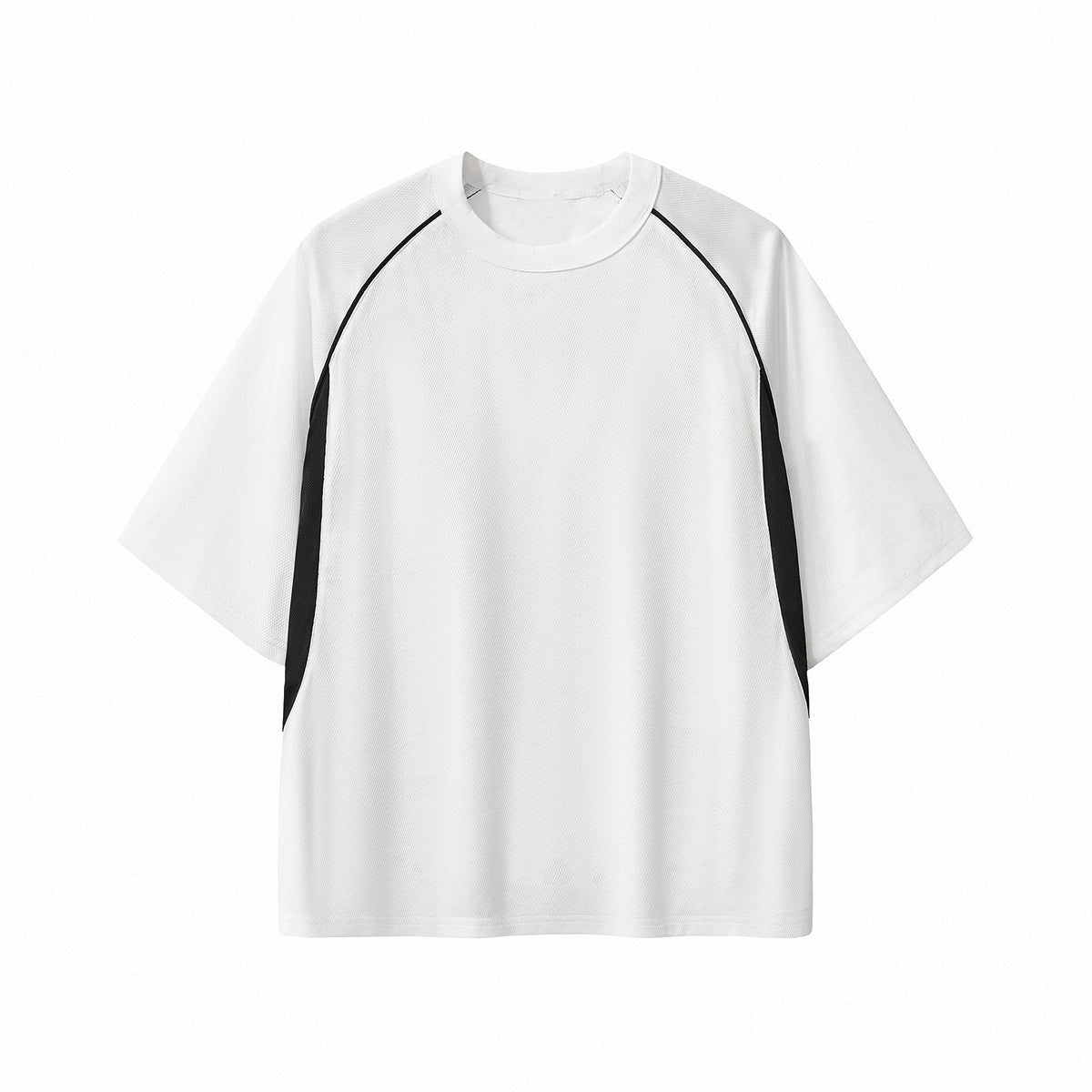
· The Main Body (140-160GSM): Usually a 100% Interlock Polyester or a Bird’s Eye Mesh. At 140GSM, the fabric is feather-light and breathable; at 160 GSM, it offers enhanced opacity and the substantial "premium" feel expected by high-end private schools and elite academies.
· Functional Processing: True performance gear must feature Mechanical Capillary Wicking. Unlike chemical sprays that wash out, this utilizes the physical shape of the fiber to pull moisture away from the skin, ensuring the athlete stays dry during high-intensity play.
2. Integrated Branding Methods
The market is moving toward Dye Sublimation. In this process, the branding is fused into the fibers at the molecular level. This is essential for the UK market because it allows for:
· Unlimited color depth and complex patterns.
· Zero added weight (the player’s name and number don't "stick" to their back).
· Guaranteed longevity (the design will never fade or crack, even after a season of muddy winter matches).
The Production Lifecycle: Why Agile Integration is the Catalyst for SMEs
Most independent brands find themselves in "Sourcing No-Man's-Land." They have outgrown the local print shop but are dismissed by industrial giants who demand Minimum Order Quantities (MOQs) of 5,000 units. This is where an SME-focused manufacturing partner in the East becomes a strategic asset.
We have re-engineered the supply chain specifically to serve as a technical R&D wing for brands that require "Industrial Quality" at "Agile Volumes."
1. Low-MOQ Flexibility: The 50-Unit Threshold
We have modularized our production lines to support professional-grade custom runs starting at just 50 units per style. This allows your label to:
· Launch niche "Anniversary Collections" or specialized school house kits without risking massive capital.
· Maintain a healthy cash flow by ordering in alignment with actual club sign-ups rather than projecting years in advance.
· Access the same 2026 British Fan-Wear Collection quality textiles used by elite organizations.
2. 3D Virtual Prototyping: Zero-Waste Speed
The old world of sourcing involves months of shipping physical samples. We have neutralized this bottleneck using 3D Virtual Fit Simulation (CLO3D). We render your designs on digital avatars representing the exact measurements of your target demographic. This reduces your R&D timeline by 70%, ensuring your first physical sample is nearly production-ready.
3. Engineering Identity at the Yarn Level
We don't just "source" fabric; we mill it. This gives our partners access to specialized high-performance tech-jerseys and GRS-certified recycled polyesters that domestic UK shops simply cannot provide at an accessible price point. Control over the knit structure allows you to offer a product that feels "pro-grade" the moment a customer touches it.
Cost Certainty and the Final Mile (DDP Logistics)
The primary deterrent for British buyers is the perceived complexity of international logistics and post-Brexit tariffs. We simplify this by offering DDP (Delivered Duty Paid) shipping. The price we quote is the final price at your warehouse door in London, Manchester, or Edinburgh. All customs, duties, and final-mile delivery are managed internally, allowing you to focus on design and client relationships rather than paperwork.
Conclusion: Scaling with Technical Certainty
The quest for a manufacturing partner is ultimately a quest for Technical Agility. While local UK options are useful for rapid, one-off needs, the long-term growth of a modern, performance-driven brand depends on innovation at the fiber level. You need a partner who understands the science of a custom weave, the precision of a 3D fit, and the financial reality of a scaling venture in the competitive school and club market.
By choosing to partner with a specialized supply chain solution for scaling global labels, you are not just outsourcing labor; you are upgrading your brand’s engine. You gain the freedom to innovate, the margins to grow, and the quality required to capture the loyalty of the next generation of British athletes.
Ready to Engineer Your Brand’s Next Iconic Team Kit?
Stop Sourcing "Parts." Start Engineering a Movement.
If you are a designer, founder, or procurement manager ready to see the side-by-side technical and cost advantages of our "Direct-to-Founder" manufacturing model, let’s collaborate.
· Access our "Elite Athletic" Sample Kit: Experience our 140-160GSM technical knits and high-definition sublimation finishes before you commit.
· Get a Custom 3D Fit Consultation: Send us your design ideas or a reference photo, and our engineers will provide a 360-degree 3D rendering and a comprehensive "Landed Cost" (DDP) comparison for your 50-unit custom run.
Would you like our technical team to provide a 3D Fit Rendering of your custom team kit design to show you how we can elevate your silhouette today?
