

The UK Garment Manufacturing Landscape
The Sourcing Dilemma: Navigating the Technical Divide Between Heritage Craft and Modern Production Agility
For many emerging designers and SME procurement managers in 2026, the initial sourcing instinct is often rooted in geography. The allure of "Made in the UK" carries a certain prestige—a narrative of heritage, localized craft, and reduced shipping distances. However, as the fashion landscape shifts toward technical complexity and tighter margins, the search for the ideal partner often leads to a critical crossroads: the choice between traditional domestic hubs and the specialized technical ecosystems found abroad.
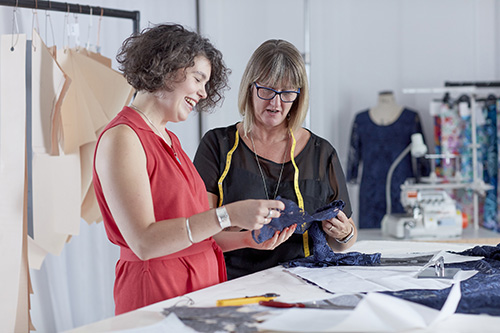
The UK Garment Manufacturing Landscape: A Study in Specialized Niches
The infrastructure of UK garment manufacturers is a fragmented yet resilient network, primarily concentrated in three historic regions.
Leicester remains the heart of the British textile industry, specializing in circular knitwear and jersey production. Historically the engine for "Fast Fashion" giants like Boohoo and ASOS, the region is optimized for quick-turnaround jersey basics. In contrast, London serves as the luxury and sampling capital. Factories in East and North London cater to high-end designers and Savile Row heritage brands, focusing on high-complexity tailoring and intricate eveningwear. Meanwhile, Manchester maintains its legacy in outerwear and commercial wovens, supporting a mix of streetwear and traditional apparel.
Despite this expertise, the UK manufacturing model presents significant structural hurdles for a startup:
· The Material Dependency: Most UK factories are "Cut, Make, and Trim" (CMT) operations. Because the UK’s domestic textile milling has significantly contracted, nearly all high-quality fabrics and specialized hardware are imported from Italy, Turkey, or the Far East. This creates a double-shipping bottleneck—importing raw materials only to export the finished product.
· The Cost of "Local": With UK energy costs and labor wages at historic highs in 2026, the per-unit cost for a mid-tier garment is often 300% to 500% higher than global alternatives. For a startup trying to maintain a competitive retail price point while scaling, these margins are often unsustainable.
· The Technical Gap: While UK factories are masters of traditional construction, many lack the investment in the latest machinery—such as 3D virtual sampling, ultrasonic welding, or seamless knitting technology—which are now the standard for premium lifestyle and technical streetwear brands.
This is precisely why the strategic search for specialized clothing manufacturers for startups China has evolved. It is no longer about finding the "cheapest" option; it is about accessing a technical ecosystem designed specifically to bridge the gap between a creative vision and a commercially viable, high-performance reality.
Why Our Technical Factory is the Strategic Choice for the 2026 Founder
We have re-engineered the traditional manufacturing model to act as a "Technical R&D Wing" for the next generation of iconic labels. We don’t just sew garments; we engineer apparel for brands that demand the technical precision of a global powerhouse with the agility of a boutique studio.
1. Breaking the MOQ Barrier (200-Unit Flexibility)
The biggest barrier to entry with high-compliance UK garment manufacturers is often the Minimum Order Quantity (MOQ). Many top-tier factories won't look at an order below 500 or 1,000 units per style.
We offer low-MOQ manufacturing starting at just 200 units per style. This allows you to launch a "Signature Collection" with custom fits and proprietary fabrics without tying up your entire capital in inventory. You can test the market, gather data, and scale based on real demand rather than guesswork.
2. 3D Digital Prototyping: Zero-Waste Speed
In the traditional model, shipping physical samples back and forth across the ocean can take months. We utilize 3D Virtual Fit Simulation to accelerate your development cycle.
"We render your designs on digital avatars that represent your target demographic's exact measurements. You can see how the fabric drapes, adjust the shoulder drop, and refine the silhouette in real-time before a single piece of fabric is cut."
This digital-first approach reduces your R&D timeline by 70% and ensures that your first physical sample is nearly production-ready, saving you thousands in development costs and courier fees.
3. Proprietary Textile Engineering
Unlike regional processors that buy what is available on the local market, we are situated at the epicenter of the world's textile supply chain. We offer:
· Custom GSM Calibration: From 240-400GSM luxury jerseys to 450-500GSM structured heavyweight fleece.
· Technical Dyeing & Finishing: High-fixation reactive dyeing that ensures your "Midnight Black" remains saturated through 50+ washes, and specialized finishes like carbon-brushing or silicone softeners.
· Sustainability Integration: Access to GOTS-certified organic cotton and GRS-certified recycled blends that meet the strict 2026 environmental standards of the US and UK markets.
4. Full Tech-Pack Support and Design Partnership
Many startup designers have a vision but lack the technical spec sheets (BOMs) required for industrial production. Our engineers act as your "In-House" technical team. We help you build comprehensive Tech Packs, ensuring that every seam, stitch count, and measurement is calibrated for a premium "retail-ready" finish that competes with Tier-1 luxury brands.
5. DDP Logistics: The Landed Price Certainty
Managing international trade shouldn't be your second job. We offer DDP (Delivered Duty Paid) shipping. The price we quote is the final price at your door in London, New York, or Los Angeles. We handle the 2026 tariffs, customs clearances, and final-mile logistics, allowing you to focus on marketing and brand-building while we handle the supply chain.
Conclusion: From Visionary to Market Leader
Starting a brand in 2026 is no longer about just "having an idea." It is about Supply Chain Engineering. While the prestige of UK garment manufacturers is undeniable for certain heritage niches, the ability to scale as a modern startup depends on your access to high-tier technical machinery and fabric innovation at a volume that matches your growth.
By partnering with specialized clothing manufacturers for startups China, you gain the technical freedom to innovate at the fiber level. You are no longer limited by what a wholesaler has "in stock." You have the power to engineer your own fit, your own fabric, and your own future.

Ready to Engineer Your Brand's Next Iconic Signature Piece?
Stop Sourcing "Blanks." Start Engineering a Movement.
If you are a designer, founder, or procurement manager ready to see the side-by-side technical and cost advantages of our "Startup-Direct" manufacturing, let’s collaborate.
· Access our "Technical Textures" Sample Kit: Experience our 240-400GSM organic cottons and specialized technical finishes with No MOQ before you commit.
· Get a Custom 3D Fit Consultation: Send us your design ideas or a photo of your favorite vintage reference, and our engineers will provide a 360-degree 3D rendering and a comprehensive "Landed Cost" comparison for a 200-unit custom run.
Would you like our technical team to provide a 3D Fit Rendering of your custom garment design to show you how we can elevate your silhouette today?
Partner with us, and make the strategic investment in world-class technical manufacturing.[📩 Contact Us Now for Catalog and Custom Quotation]
