

Carton Drop Testing for Apparel Export Packaging
Mastering Carton Drop Testing for Apparel Export: Protecting Garments from UK Transit Damage
For apparel brands exporting to the United Kingdom, robust transit packaging is as critical as garment construction. Navigating international logistics—from ocean container freight and cross-dock handling to regional distribution centers across the UK—subjects packaged apparel to severe mechanical stress.
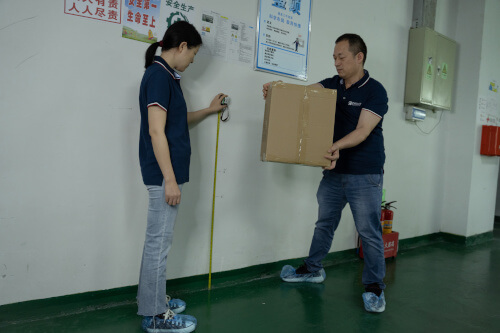
A single crushed outer carton can trigger downstream issues: moisture ingress, garment creasing, damaged retail hangtags, or outright rejection by UK fulfillment centers such as Amazon FBA, ASOS, or major High Street department stores. Executing standardized carton drop testing for apparel export packaging ensures your shipment survives transit untouched, protecting your working capital and brand reputation.
1. The Mechanics of ISTA 1A and ISTA 2A Drop Testing Standards
International Safe Transit Association (ISTA) protocols provide the global baseline for packaging transit safety. For apparel packed in corrugated master cartons, two primary test procedures dictate compliance:
- ISTA 1A (Non-Simulation Integrity Testing): Ideal for basic quality checks, ISTA 1A evaluates the ability of a sealed master carton to withstand rough handling across ten specific drop orientations (including corner, edge, and flat face drops).
- ISTA 2A (Partial Simulation Integrity Testing): Combines standard drop sequences with atmospheric conditioning (temperature and relative humidity exposure) to simulate moisture changes during ocean transit from Asia or Europe to British ports.
- Drop Height Determination: Drop heights are inversely proportional to total carton weight. A packaged garment carton weighing under 10 kg typically undergoes drops from a height of 76 cm (30 inches), whereas cartons weighing 10 kg to 19 kg drop from 61 cm (24 inches).

2. Step-by-Step 10-Drop Sequence for Apparel Master Cartons
To achieve certified packaging compliance, the master carton—fully packed with folded garments, polybags, desiccants, and tissue paper—must undergo a rigorous 10-drop sequence onto a non-yielding rigid surface such as solid concrete.
- Corner Drop (Drop 1): The carton is dropped on the most vulnerable top-corner junction (typically corner 5-2-3), testing corner crush resistance and structural glue lines.
- Edge Drops (Drops 2 to 4): Three consecutive drops are performed on the shortest edge, medium edge, and longest edge radiating from the tested corner.
- Face Drops (Drops 5 to 10): The final six drops are conducted flat on all six exterior faces—bottom, top, long sides, and short ends.
Post-test inspection evaluates both exterior carton integrity (burst seams, crushed corners, tape failure) and interior product protection (polybag punctures, crushed inner retail boxes, garment displacement).
3. Corrugated Board Selection and Moisture Defense for UK Logistics
The humid oceanic climate of the United Kingdom, combined with ocean container condensation (often called "container rain"), rapidly degrades paper fiber strength. Standard single-wall cardboard frequently collapses when stacked six-high in humid UK warehouses.
- Double-Wall Corrugated Construction: For export garments, specify BC-flute or EB-flute double-wall corrugated cardboard with a bursting strength of at least 200 psi (Pounds per Square Inch) or an Edge Crush Test (ECT) rating of 42 ECT or higher.
- Moisture-Resistant Kraft Paper: Ensure outer facings utilize high-grammage Virgin Kraft Paper rather than recycled test liner. Kraft paper resists ambient humidity absorption far better, preserving structural rigidity throughout the supply chain.
- Desiccant Packets and Sealed Inner Liners: Combine inner master polybag liners with active silica gel or calcium chloride desiccant packs to absorb trapped air moisture before it can compromise carton fibers from the inside out.
4. UK Retailer Compliance and Rejection Protocols
UK distribution hubs enforce strict inbound packaging guidelines to maintain automated conveyor sorting and rack storage safety. Failing transit standards incurs heavy penalties.
- Palletization and Stacking Integrity: Cartons must retain square, vertical sides without bulging or sagging when stacked on standard UK pallets (1200 mm x 1000 mm). Crushed bottom cartons lead to unstable pallet loads that UK warehouses will turn away.
- Barcode and Label Readability: A squashed or warped carton face distorts exterior shipping labels, GS1 barcodes, and SKU stickers, making them unscannable by automated UK logistics systems and incurring manual labeling chargebacks.
- Zero Garment Contamination: Carton tears or tape splits allow dust, road debris, or moisture to penetrate inner polybags, spoiling pristine garments before they reach the retail floor.
5. Partnering with Export-Ready Garment Manufacturers
Preventing transit damage starts at the factory floor. Expert garment manufacturers integrate packaging engineering into the early stages of production planning rather than treating export packaging as an afterthought.
Working alongside specialized manufacturing partners like Innblac allows fashion brands and retail buyers to implement rigorous quality assurance protocols from garment assembly down to certified master carton drop testing. Ensuring your supplier strictly enforces international packaging standards protects your products across every step of their journey to the UK market.
-
Posted in
Apparel Quality Control
